The legacy of the old Frisians!
To be honest, I was never particularly interested in history; dates and historical facts usually struck me as far too dry. But that morning, sitting in front of my laptop, everything changed. I had always viewed the stories my grandmother shared with me as a kind of fairy tale, so I was amazed to discover just how many historical facts were woven into them. I simply couldn't get Grandma’s story about the "people by the sea" out of my mind. Suddenly, I wanted to know more. I began to dig—and stumbled upon the fascinating truth behind her words. The information I have briefly summarized here comes from my own research and the insights of others who have studied this history in greater depth. Since this era—dating back many centuries—also forms a piece of my own ancestry, I am grateful to draw upon this knowledge gathered by others.
Magna Frisia: The Struggle for Faith
The Frisian people are native to the Dutch and German North Sea coast. Their language was Old Frisian, considered the precursor to the modern Frisian language. The existence of Frisian tribes is documented as far back as early antiquity—specifically around 800 BC. This coastal people subsisted on peat cutting, salt production, and fishing. They wove their nets from reeds and rushes, as the barren land offered little other vegetation. Possessing a faith deeply rooted in nature, the Frisians fiercely resisted attempts to convert them. King Radbod, in particular—who ruled over the Greater Frisian realm—fought against subjugation and Christianization. It was only after his death in 729 AD that the great pagan state of "Magna Frisia" succumbed to the Franks. The conquerors cracked down ruthlessly on pagan customs, killing anyone who refused to be baptized into the Christian faith. They destroyed the small woodlands containing their sanctuaries—sites known as "sacred groves." Here, sheltered by their sacred trees, the Frisians had once paid homage to their gods. Where their sacrificial sites had once stood, the new churches of a foreign religion now arose. The conquerors fashioned the new structures from the timber of the sacred trees, erecting them directly upon the ancestral holy grounds. Although retaliatory campaigns were launched against the churches and monasteries, Christianity was never able to fully eradicate the old faith, which was rooted in Germanic religion.
The Great Drowning and the Black Death
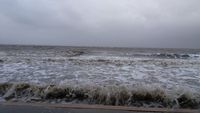
Severe storm surges further complicated life along the coast, claiming countless human and animal lives. One flood stands out particularly in historical records: the Second St. Marcellus Flood—named after a former Bishop of Rome—which struck the land with immense force. This devastating deluge, which lasted three days, has gone down in history as "the Great Drowning." It not only swept away valuable land but also claimed the lives of more than 100,000 people. The subsequent plague epidemic—popularly known as the "Black Death"—offered no respite from the suffering; at the end of the 14th century, it decimated the population once again. It is entirely understandable to me that people at the time viewed this as a form of "divine wrath" and associated it with the biblical Great Flood. Famine and the breakdown of social order ensued, ultimately giving rise to the system of chieftaincy in East Frisia. In search of stability and protection, the population placed their hopes in the hands of major landowners and farmers.
The Cradle of Frisian Freedom
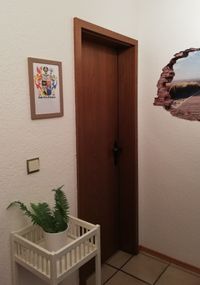
Following the Viking Age, East Frisia was able to expand its autonomy. While feudal rule prevailed across the rest of Europe, the foundations of democracy were being laid here on the coast. Once a year, representatives of the various clans—known as *Redjeven*—would gather to administer justice collectively. They always met at the Upstalsboom on a Tuesday during Whitsun week. Today, this burial mound serves as a monument commemorating that historic meeting place. The oral tradition of Frisian freedom was confirmed by Emperor Sigismund in 1493 and formally recognized in a legal document; that document is now housed at the Dutch Institute for Frisian History and Literature in Leeuwarden. Today, the motto "Eala Frya Fresena" hangs in my hallway. Living in freedom remains our most precious asset—and I certainly do not mean that solely for the Frisians!
IMG_20200611_212317